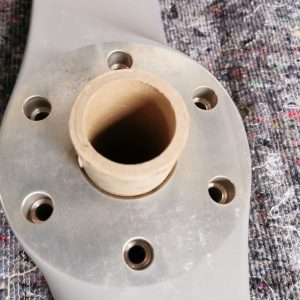
New, Never Installed offers replacement and project value for buyers seeking an unused fixed-pitch propeller with clear manufacturer identification and documented storage history.
The shortened Sensenich 74DM6 Propeller description can improve search visibility, while the complete part number should remain available for technical review.
The Sensenich Fixed-Pitch Propeller, Sensenich Aluminum Propeller, Fixed-Pitch Aluminum Propeller, and Aluminum Aircraft Propeller keywords describe important design and material characteristics.
The 74-Inch Aircraft Propeller, 60-Inch Pitch Propeller, Lycoming O-320 Propeller, and General Aviation Propeller keywords represent common dimensional, engine, and application searches associated with the model.
The Two-Blade Aircraft Propeller, Sensenich Aircraft Propeller, Replacement Aircraft Propeller, and Certified Aircraft Propeller phrases can help professional buyers locate a component for maintenance, restoration, new construction, or inventory.
Identifying the Sensenich Propeller Correctly
A propeller should not be accepted as P/N 74DM6-0-60 solely because it resembles another Sensenich model shown in a catalog or online advertisement.
The serial number should match all supplied invoices, manufacturer documents, inspection records, and release paperwork.
Verifying Condition Before Installation
Transparent history helps buyers understand the difference between unused status and current installation readiness.
A never-installed statement may be supported by the absence of operational erosion, mounting impressions, spinner contact, bolt marks, and documented operating time.
Evaluating General Aviation Propeller Requirements
A propeller suitable for one aircraft equipped with a Lycoming O-320 may not be appropriate for another aircraft using a different engine variant or airframe configuration.
Incorrect dimensions can produce operational concerns even when the propeller fits physically on the flange.
Aluminum Aircraft Propeller Construction
Material condition should be reviewed by appropriately qualified aviation personnel.
Identification markings should remain legible and protected during handling.
Avoiding Unverified Propeller Size Claims
Any authorized diameter reduction should appear in the propeller markings and maintenance records.
The receiving aircraft must provide sufficient propeller clearance under applicable loading and operating conditions.
Documenting the Propeller Configuration
Pitch influences theoretical forward movement, engine loading, achievable RPM, climb behavior, and cruise characteristics.
A never-installed propeller should still be reviewed for shipping distortion, impact, or manufacturing-record consistency.
Selecting an Approved Propeller Installation
A propeller approved for one O-320-powered aircraft may not be approved for another aircraft using a different engine variant, airframe, spinner, or installation configuration.
A previous aircraft application can provide useful context but does not replace current approved technical data.
Evaluating Both Propeller Blades
Matched blade condition supports smoother propeller operation.
Careful handling preserves the Two-Blade Aircraft Propeller assembly.
Hub and Mounting Configuration
The mounting face should remain clean, flat, protected, and free from defects that could prevent correct seating.
Fasteners should not be selected solely by visual appearance, basic diameter, or thread size.
Checking a New Sensenich Propeller
Blade faces and backs should be examined for pressure marks, stains, chemical exposure, paint defects, surface distortion, and trapped contamination.
Detailed surface review helps support the claimed new condition.
Maintaining the Factory Finish
Aluminum propellers can develop corrosion after exposure to moisture, condensation, coastal air, chemicals, damaged coatings, or unsuitable storage materials.
Periodic inspection can Sensenich Fixed-Pitch Propeller identify developing coating or environmental concerns.
Reviewing Propeller Release Documentation
Accurate language prevents unsupported certification or installation claims.
Installation eligibility depends on the exact aircraft, engine, configuration, approved data, and applicable maintenance requirements.
Evaluating Release Paperwork
The serial number should match every manufacturer record, inspection tag, shipping document, and release certificate.
Complete history supports future maintenance, installation research, and resale.
Pre-Purchase Inspection Checklist
The buyer should obtain enough information for a qualified propeller specialist or aviation mechanic to review the component.
- Request clear photographs of the data plate, blade faces, blade backs, leading edges, trailing edges, tips, hub, mounting face, bolt holes, packaging, and storage supports.
- Inspect or document the diameter, pitch, blade symmetry, finish condition, corrosion, pitting, scratches, dents, cracks, coating damage, tip shape, mounting holes, and hub surfaces.
- Retain photographs, serial information, measurements, purchase records, inspection reports, release documents, and freight paperwork with the aircraft project file.
Shipping the Sensenich Propeller
Blade tips, leading edges, trailing edges, mounting surfaces, bolt holes, identification plates, and factory coatings require suitable protection.
Loose hardware, records, spinner components, and accessories should be wrapped, labeled, and secured separately.
Storing the 74DM6-0-60 Propeller
Responsible storage preserves the future usefulness of the Aluminum Aircraft Propeller.
Organized storage supports the commercial value of the General Aviation Propeller.
Mounting the Replacement Aircraft Propeller
The engine flange, pilot fit, mounting surfaces, threads, bolt holes, and related components should be inspected before assembly.
Spinner components should maintain suitable alignment, attachment, and clearance without causing stress or imbalance.
After installation, technicians should verify security, propeller clearance, blade tracking, spinner alignment, hardware condition, and surrounding aircraft components before starting the engine.
Caring for the Fixed-Pitch Aluminum Propeller
Consistent maintenance protects the Sensenich Fixed-Pitch Propeller.
Recurring vibration should prompt review of the propeller, spinner, engine mounts, flange, ignition system, and engine condition.
Replacement Propeller Ownership Costs
Honest information strengthens buyer confidence and reduces disputes.
Commercial evaluation should focus on verified suitability rather than condition wording alone.
74DM6-0-60 Aircraft Propeller Conclusion
The Sensenich Propeller – P/N 74DM6-0-60
Careful technical and commercial review can reduce compatibility problems, missing-hardware expenses, storage-related concerns, installation delays, inspection costs, and documentation issues.
Whether buyers need a Sensenich Fixed-Pitch Propeller, Sensenich Aluminum Propeller, Fixed-Pitch Aluminum Propeller, or Aluminum Aircraft Propeller, current condition and dimensional conformity should be verified.
New, Never Installed can deliver a professional combination of fixed-pitch simplicity, aluminum construction, replacement value, and general aviation application potential.